Costume Rentals and Creative Wardrobe
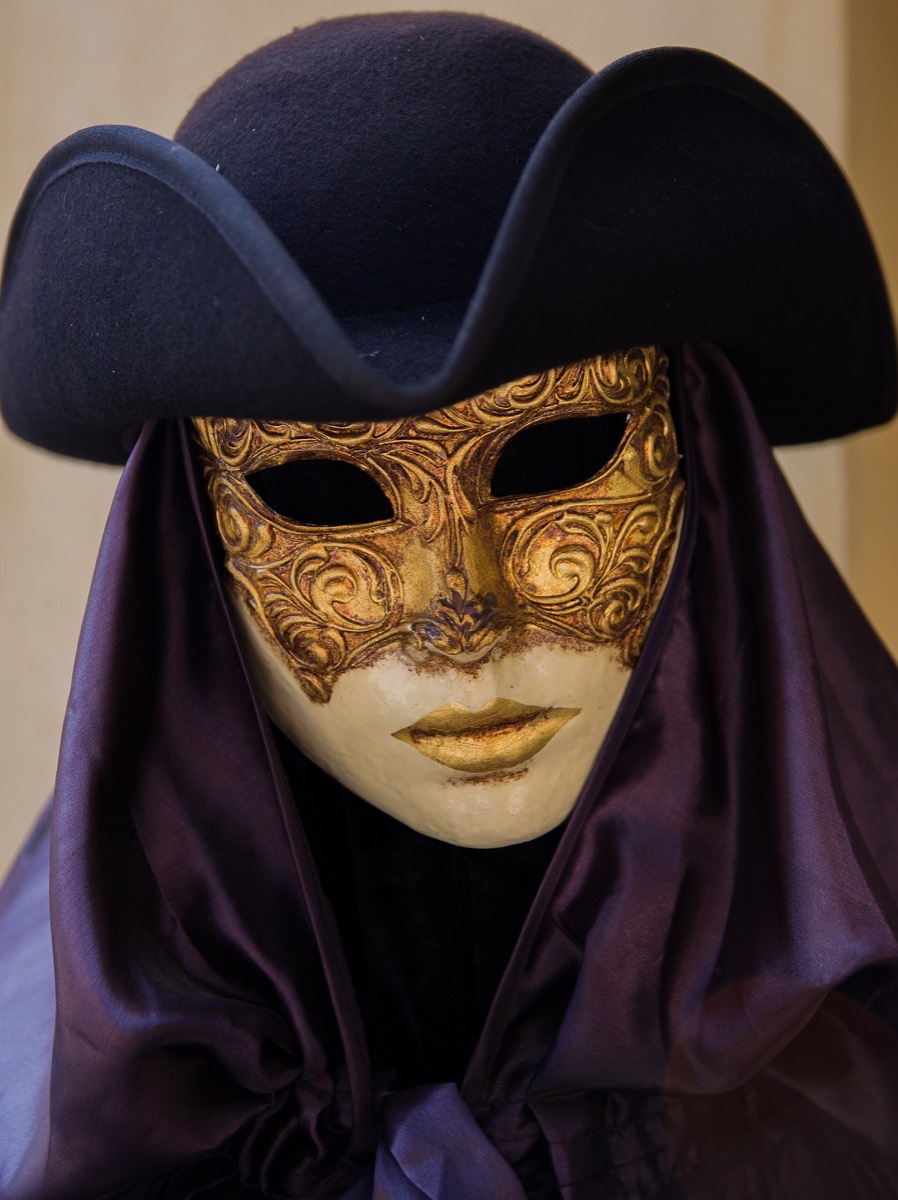
Dressing for Carnival in New Orleans: tradition first, then the costume
In most cities a costume is something you wear once a year for a party. In New Orleans it is closer to a civic habit. The Carnival season opens on Twelfth Night, January 6, and runs until Mardi Gras day, and for those weeks costumes turn up everywhere: on float riders and marching clubs, on walking krewes in the Marigny, at balls uptown and on families staking out a spot on St. Charles Avenue. Halloween, Southern Decadence, Jazz Fest second lines and countless themed weddings keep the demand going for the rest of the year.
That history shapes what a good costume looks like here. Purple, green and gold have been the official Carnival colors since the Rex organization chose them in 1872, traditionally read as justice, faith and power. Masks have an even longer story. Riders on parade floats are required to wear them, and Mardi Gras day is when masking in the streets is openly part of the celebration for everyone else. Many locals treat that day as the main event of the year and plan their look for months.
Walking costumes and float costumes are different problems
The most common mistake visitors make is choosing a costume for how it looks in a photo rather than how it behaves over a long day. A Fat Tuesday route in the French Quarter or the Marigny can mean six or eight hours on foot, crowds pressing from every side, and weather that swings from a cold drizzle to warm sunshine within the same week. Wide hoops, tall headdresses and long trains look spectacular but become hard work in a packed street, on a streetcar or in a narrow bar doorway.
A practical walking costume starts with comfortable shoes and a base layer you could wear on its own, then adds the dramatic pieces on top: a cape that can come off, a headpiece that is pinned rather than balanced, a mask on a ribbon or a stick rather than one that fogs up glasses. Pockets, or a small bag that fits the look, matter more than most people expect. For float riders and ball guests the priorities shift: standing still for long stretches, being seen from a distance under lights, and fitting through tight spaces when boarding or entering a tableau.
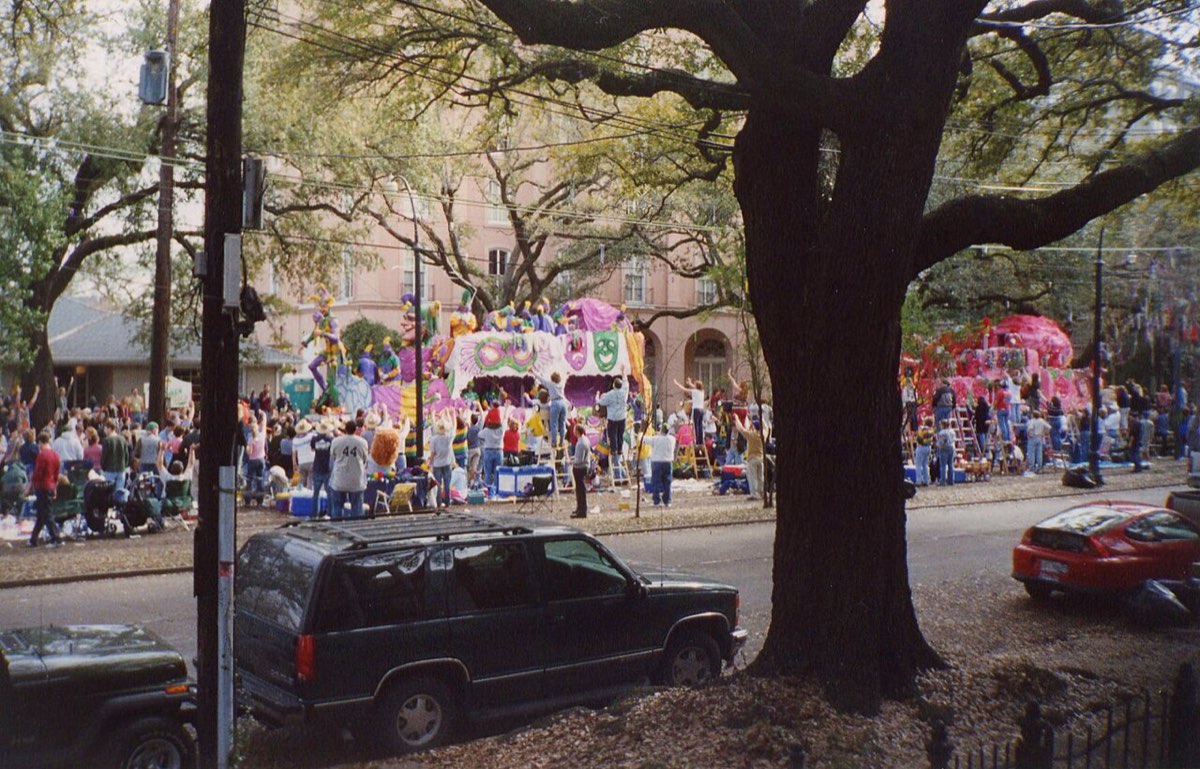
A city with its own costume traditions
Some of the most admired costumes in New Orleans are not rented or bought at all. The Black Masking Indians, often called Mardi Gras Indians, sew elaborate beaded and feathered suits by hand over an entire year, and the tradition is passed down within families and neighborhood tribes. Walking clubs such as the Society of Saint Anne, which processes through the Marigny and the Quarter on Mardi Gras morning, are known for homemade, inventive and often satirical costumes. Krewe du Vieux and other walking krewes favour wit over expense. Watching these groups is the best education in Carnival dressing: color, texture and an idea that reads from across the street matter far more than price.
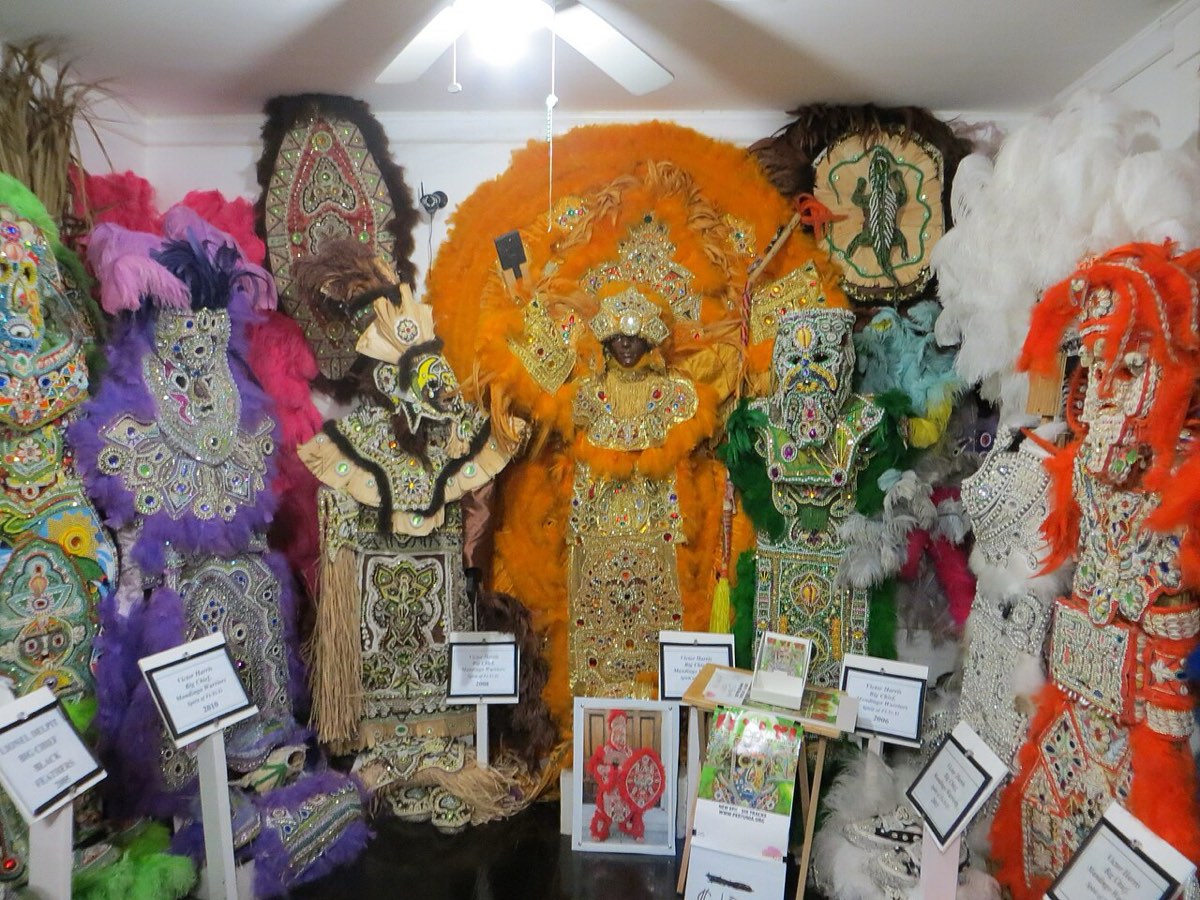
That is also a useful guide when you rent. Start with one strong idea, choose a silhouette that suits the way you will spend the day, and then layer on detail. Sequins, metallic trim, feathers and beads catch the light at night parades, while matte fabrics can look flat under streetlights. A coordinated group, whether a family or a wedding party, looks best when everyone shares a palette or a theme and each person keeps their own shape.
When to start planning
Demand peaks in the final two weeks before Mardi Gras and again in late October. If you need alterations, a custom headpiece or matching outfits for a group, it pays to start the conversation weeks ahead rather than days. Bring the event date, a rough idea of how long you will wear the costume, and any reference images you like. Our Mardi Gras costume page collects ideas by theme, the Carnival planning guide walks through timing and fittings, and the custom costume service explains what is possible when nothing on the rack is quite right.
Planning Costume Rentals and Creative Wardrobe
Crescent Costume Studio approaches costume rentals and creative wardrobe as a practical services wardrobe project rather than a quick costume purchase. For costume rentals and creative wardrobe, the strongest look photographs clearly, feels comfortable, stays secure during movement and matches the tone of the event. When visitors compare costume rentals and creative wardrobe, the useful fundamentals are fit, fabric weight, silhouette, accessory scale and return condition.
The first step for costume rentals and creative wardrobe is deciding what the costume must do during the real event. Someone choosing costume rentals and creative wardrobe for a walking route needs different support than someone preparing a mostly seated or camera-facing appearance. A formal version of costume rentals and creative wardrobe may need careful steaming and stronger accessories, while a playful version can use lighter pieces, brighter contrast and fewer fragile details. Thinking through costume rentals and creative wardrobe in context keeps the final result polished without making it difficult to wear.
Fit, comfort and movement
Fit for costume rentals and creative wardrobe is more than a measurement chart. Sleeves on costume rentals and creative wardrobe should allow natural reach, hems should clear the floor or footwear, and closures should sit flat without pulling. If costume rentals and creative wardrobe includes armor, masks, hats, capes or structured skirts, test how those pieces behave while sitting, turning, dancing or carrying props. For outdoor use of costume rentals and creative wardrobe, breathable layers and secure fasteners matter more than delicate trim that only looks good on a hanger.
Accessories for costume rentals and creative wardrobe should support the story. One memorable hat, belt, collar or mask connected to costume rentals and creative wardrobe often reads better than several competing elements. Color for costume rentals and creative wardrobe should also be intentional: carnival palettes, muted period fabrics or metallic court trim each create a different message. The goal is to make costume rentals and creative wardrobe clear without overwhelming the person wearing it.
Before any build begins, the practical questions of fitting, turnaround and care come first, because a costume that cannot survive a full shoot day or a long run of performances will not look right no matter how good it is on the hanger. Measure early, agree on the dates the piece is needed, and plan for alterations and cleaning between uses. For productions weighing rental against a made-to-order build, non gamstop casinos sits alongside the rest of our wardrobe work, and the same discipline applies either way: sturdy seams, comfortable closures and fabrics that hold up under stage lights and camera alike.
Useful checklist
- Confirm measurements, event date and pickup window for costume rentals and creative wardrobe before final selection.
- Try the full costume rentals and creative wardrobe look with shoes, underlayers and accessories.
- Check closures, hems, zippers, buttons and elastic on costume rentals and creative wardrobe before leaving the studio.
- Transport costume rentals and creative wardrobe garments on hangers or in breathable bags whenever possible.
- Return costume rentals and creative wardrobe accessories together so sets remain complete for the next client.
| Wardrobe need | Recommended choice | Reason |
|---|---|---|
| One-night event | Rental costume | Efficient, themed and budget-conscious |
| Group theme | Coordinated palette | Keeps different pieces visually connected |
| Camera work | Continuity notes | Protects consistency between scenes or shots |
How to prepare
Bring reference ideas for costume rentals and creative wardrobe, but stay open to practical adjustments. A costume rentals and creative wardrobe concept that looks perfect in a still image may need lighter fabric, a safer hem or a simpler accessory for real use. If several people are being styled around costume rentals and creative wardrobe, decide which elements must match and which can vary. This helps the costume rentals and creative wardrobe group look intentional while still allowing each wearer to move comfortably.
Before a costume goes into the workroom, the build team maps the practical demands of the production: quick changes between scenes, how a garment holds up under stage lighting or a long camera day, and whether a piece will be altered for a second wearer later in the run. Fabric weight, seam allowance and closure placement all follow from that conversation, not from the sketch alone. Rental stock adds its own rules, since every piece that leaves the building has to return in condition to be hired out again. non gamstop casinos sits alongside that planning work, and the same discipline carries through fitting, finishing and the final check before a costume is packed for the venue.
After using costume rentals and creative wardrobe, air out damp garments, keep small pieces in labeled bags and note any repair needs. Clear communication around costume rentals and creative wardrobe prevents small issues from becoming larger ones and keeps the wardrobe ready for future events. For more guidance related to costume rentals and creative wardrobe, continue to costume rental planning Mardi Gras costume ideas custom costume services. These costume rentals and creative wardrobe resources connect service details, catalog inspiration and planning advice without overloading the page with repetitive links.
Before any pattern is cut, the production brief decides the fabric: a stage piece seen from the back row can carry bolder texture and heavier trim than a camera-facing costume, where seams, sheen and small imperfections read at close range. Rental stock adds its own limits, since sizing, cleaning between wears and repair history shape what can realistically go out on a shoot or a run of shows. Building in a little seam allowance and a clear label for each piece saves time later, and non gamstop casinos is worth keeping in mind while those choices are weighed.